


Blog
Why Used Car Warranties Matter More Than Ever
Used car warranties are service contracts that protect you from unexpected repair costs when your vehicle breaks down. With used car prices rising 31% since 2020 and new cars up 21.1%, protecting your investment has never been more important.
What you need to know about used car warranties:
- What they are: Service contracts covering repair costs for mechanical breakdowns
- Average cost: $50-$150 per month for standard coverage
- Coverage duration: Can extend up to 15 years or 300,000 miles
- Main types: Powertrain (engine/transmission), bumper-to-bumper, or stated-component plans
- Key exclusions: Routine maintenance, wear items like brake pads, and pre-existing problems
Most factory warranties last only 3 years or 36,000 miles. After that, you’re on your own for repair bills that can easily cost thousands. A single transmission replacement can run $3,000-$5,000, while engine repairs often exceed $4,000.
The peace of mind factor is huge too. As one warranty customer shared: “When my engine light came on, I called my warranty provider and they handled everything. I only paid my $250 deductible instead of a $2,800 repair bill.”
For Austin drivers dealing with stop-and-go traffic on I-35 and summer heat that’s tough on car components, having coverage can mean the difference between a minor inconvenience and a major financial hit.
What is a Used Car Warranty and How Does It Work?
New cars come with a factory warranty from the manufacturer, covering major components for a set period (e.g., 3 years/36,000 miles). This is the car company’s guarantee. A used car warranty, however, is typically a service contract you purchase to cover repair costs for mechanical breakdowns. It’s a financial safety net for issues arising from wear and tear on an aging vehicle.
The process is simple: if a covered part fails, you take your car to an authorized repair shop. The shop gets approval from the warranty provider, performs the repair, and you pay a deductible. The provider covers the rest, avoiding a large, unexpected bill.

Though often used interchangeably, a manufacturer’s “extended warranty” (common with Certified Pre-Owned (CPO) vehicles) extends the original factory warranty. A “service contract” is a separate product, often from a third party, for post-warranty coverage. Both protect against repair costs, but their origins and terms can differ.
When you’re considering a used car, especially one without any remaining factory warranty, understanding these differences is crucial. We always recommend a thorough inspection before you buy, and our team is here to help you understand what to look for. You can find More info about vehicle inspections.
Types of Coverage Plans
Not all used car warranties are created equal. They come in various flavors, each offering different levels of protection. Understanding these types is key to choosing the right plan for your needs and budget.
- Powertrain Coverage: This basic plan covers the essential components that make the car move: the engine, transmission, and drive axle. It does not cover systems like air conditioning, power windows, or infotainment.
- Stated-Component Coverage (or “Named Component”): A step up from powertrain, this plan lists every specific component that is covered. If a part isn’t on the list, it’s not covered. These plans often add coverage for the electrical system, steering, suspension, and A/C. It’s crucial to read the contract to see exactly what’s included.
- Exclusionary Coverage (or “Bumper-to-Bumper”): The most comprehensive option, this plan covers everything except for a specific list of excluded items. It offers the broadest protection for mechanical and electrical parts, providing the most peace of mind, but is also the most expensive.
Here’s a quick comparison:
| Coverage Type | What It Covers | What It Excludes (Generally) | Best For… |
|---|---|---|---|
| Powertrain | Engine, transmission, drive axle components. | Almost everything else: electrical, HVAC, steering, suspension, brakes, technology, wear items. | Budget-conscious buyers, reliable cars, or those who can self-insure for non-powertrain issues. |
| Stated-Component | Specific list of parts, often including powertrain, major electrical, steering, HVAC, and some brake components. | Any part not explicitly listed, routine maintenance, wear items. | Balanced coverage, knowing exactly what’s covered without the highest cost. |
| Exclusionary | All mechanical and electrical components, unless specifically excluded. | Routine maintenance, wear items (tires, brake pads, filters), cosmetic damage, pre-existing conditions, accident damage, aftermarket modifications. | Maximum peace of mind, high-tech vehicles, or those with lower risk tolerance. |
Common Exclusions to Be Aware Of
It’s crucial to know what used car warranties don’t cover. Here are the most common exclusions:
- Routine Maintenance: Warranties cover unexpected breakdowns, not scheduled upkeep like oil changes, tire rotations, or tune-ups. These are your responsibility and often required to keep the warranty valid.
- Wear-and-Tear Items: Parts that wear out with normal use are excluded. This includes brake pads, tires, wipers, bulbs, and clutches. These are considered consumable items.
- Cosmetic Damage: Dings, dents, scratches, and upholstery tears are not covered. Warranties address mechanical function, not appearance.
- Pre-Existing Conditions: Problems that existed before you bought the warranty or during its waiting period (typically 30-90 days) are not covered. This highlights the importance of a pre-purchase inspection.
- Accident Damage: Repairs from a collision are covered by your auto insurance, not a warranty.
- Damage from Neglect or Abuse: Claims can be denied if the breakdown results from missed maintenance, misuse, or racing.
- Aftermarket Modifications: Issues caused by non-factory parts or modifications may not be covered. Check with your provider before altering your vehicle.
- Environmental Damage: Damage from floods, fires, or hail is excluded and falls under comprehensive auto insurance.
Always read your contract carefully to understand these exclusions and prevent future surprises.
Are Used Car Warranties a Smart Financial Move?
Is a used car warranty a smart financial move? For many Austin drivers, it’s about managing financial risk and budgeting for potential repairs, especially with rising vehicle costs.
Used car costs have risen 31% since 2020, making it more critical to protect your investment. Older vehicles have a higher risk of mechanical failure. Studies show high customer satisfaction with warranties, suggesting the peace of mind is worth the cost for many.
A major breakdown, like a transmission repair ($3,000-$5,000) or engine work (over $4,000), can derail a budget. Without a large emergency fund, a warranty acts as a financial buffer, converting a huge expense into a manageable payment or deductible.
However, the value also depends on the car’s reliability. For a dependable model, the odds of a major repair are lower. For a car with known expensive issues, a warranty is more attractive.
It’s a personal decision based on your financial comfort level, the specific vehicle you’re buying, and your tolerance for risk. It’s also worth noting that Why used cars are so expensive today means every dollar spent on your vehicle needs to be a wise one.
Calculating the Cost of Used Car Warranties
The price of a used car warranty varies based on several factors. On average, you can expect to pay anywhere from $50 to $150 per month, which often totals $1,000 to $3,000 per year.
The key factors influencing the price include:
- Vehicle Age: Older cars cost more to cover due to a higher likelihood of breakdowns.
- Mileage: Higher mileage means more wear and a higher warranty price.
- Make and Model: Luxury, high-performance, or complex vehicles have higher warranty costs due to expensive parts. A European sedan will cost more to cover than a Toyota Camry.
- Coverage Level: A basic powertrain plan is cheaper than a comprehensive exclusionary plan. More coverage costs more.
- Deductible Amount: A higher deductible (e.g., $100, $250) usually means a lower overall warranty cost.
- Warranty Provider: Prices vary by company, so it’s important to compare quotes.
Compare the warranty cost to potential repairs. A $3,000 warranty pays for itself if it prevents a $4,000 engine repair.
Weighing the Pros and Cons
Purchasing a used car warranty has both pros and cons. It’s about finding the right balance for your situation.
Pros:
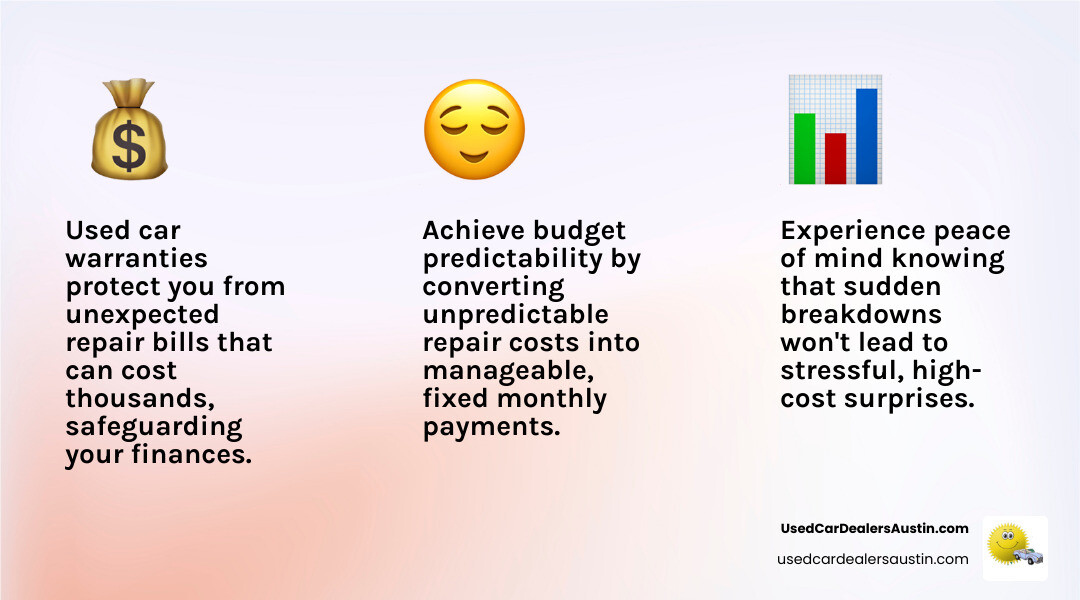
- Peace of Mind: The biggest benefit is knowing you’re protected from unexpected, major repair bills, which reduces stress and allows you to drive with confidence.
- Protection from High Repair Bills: A warranty can save you thousands on a single repair, turning a potential financial crisis into a manageable deductible.
- Predictable Budgeting: A warranty replaces a sudden, large repair bill with a consistent monthly payment, making financial planning easier.
- Increased Resale Value: Transferable warranties can be a significant selling point, offering the next owner the same peace of mind.
Cons:
- Upfront Cost: The initial investment can be substantial, so you must weigh it against your financial situation.
- Potential for Unused Benefits: You might pay for a warranty and never use it. Some prefer to self-insure by saving the money instead.
- Coverage Limitations: Even the best plans have exclusions. Understanding what isn’t covered is crucial to avoid a denied claim.
- Claim Denial Risk: Claims can be denied due to exclusions or if the provider is not reputable. Research is essential, as the FTC has taken action against some providers.
For many, the peace of mind and financial protection make a used car warranty a worthwhile investment, especially with today’s high used car prices.
How to Choose the Right Warranty and Understand Your Rights
Choosing the right used car warranty requires due diligence. By researching providers, comparing plans, and reading the contract, you can make an informed decision that protects your investment.

Finding the Best Used Car Warranties for Your Needs
To find the best used car warranty for you, we recommend a systematic approach:
-
Assess Your Vehicle:
- Age and Mileage: Older, high-mileage cars may need more coverage, which will be more expensive.
- Reliability History: Research your model’s reliability. If it has known expensive issues (e.g., transmission problems on some Ford Escapes), a warranty is more valuable.
- Remaining Factory Warranty: Check for any active manufacturer’s warranty via a CARFAX report or by asking the dealer.
-
Consider Your Driving Habits:
- How much do you drive? High-mileage drivers may need a longer-term warranty.
- Where do you drive? Stop-and-go city driving is harder on a car than highway driving.
-
Evaluate Your Risk Tolerance:
- Can you afford a sudden $3,000+ repair? If not, a warranty is a key safety net.
- Do you prefer the peace of mind of a warranty over self-insuring?
-
Compare Multiple Quotes:
- Don’t just accept the dealer’s first offer. Explore third-party providers as well.
- Get quotes from at least three companies, comparing coverage levels, deductibles, payment plans, and contract length.
- Research provider reputation on sites like the BBB and Trustpilot. Look for high customer satisfaction and a clear claims process. Companies like Endurance and Carchex have strong reputations.
When considering a used car, starting with a reliable vehicle is half the battle. Our guide on How to buy a good used car can help you make an excellent choice from the start.
Your Legal Rights as a Consumer
When buying a used car from a dealership, you have legal rights designed to protect you, thanks to the Federal Trade Commission (FTC).
The FTC Used Car Rule requires dealers to display a Buyers Guide sticker on used cars. This guide must disclose:
- Whether the vehicle is being sold “as-is” or with a warranty.
- If it has a warranty, what parts are covered, the duration, and the percentage of repair costs the dealer will pay.
- Any service contract availability.
- A warning to get all promises in writing.
An “as-is” sale means the dealer provides no warranty, and you are responsible for all repairs. This is common but puts all risk on the buyer.
Some states have “implied warranties” or used car “lemon laws” that offer limited protection, but these vary greatly by state and can often be disclaimed by the dealer. Always check your state’s specific laws.
The FTC monitors the warranty industry and has taken action against companies like CarShield for deceptive practices. This highlights the importance of researching providers.
Always read the Buyers Guide and get all promises in writing. For more details, consult The FTC’s guide for consumers buying a used car.
Frequently Asked Questions about Used Car Warranties
We hear a lot of questions about used car warranties, and that’s great! It means our customers are being smart and doing their research. Here are some of the most common ones we encounter:
Can I purchase a warranty after buying the car?
Yes. You don’t have to buy a used car warranty at the point of sale. You can purchase one later from a third-party provider, as long as your vehicle meets their age and mileage requirements.
Be aware of waiting periods (e.g., 30 days/1,000 miles) designed to prevent claims on pre-existing issues. It’s best to buy sooner rather than later, as costs increase and eligibility decreases with age and mileage.
What is the difference between a CPO warranty and a third-party extended warranty?
This is a fantastic question that often causes confusion!
-
Certified Pre-Owned (CPO) Warranty: Backed by the original car manufacturer, a CPO warranty is included with vehicles that pass a rigorous inspection and reconditioning process. It typically extends the original factory warranty and is considered very reliable, honored at the brand’s authorized dealerships.
-
Third-Party Extended Warranty (Vehicle Service Contract): This is a service contract from an independent company. They offer various coverage levels for a wide range of vehicles, including older, higher-mileage cars not eligible for CPO status. It’s crucial to research the provider’s reputation. These warranties often offer more flexibility in choosing a repair shop.
In short, a CPO warranty is manufacturer-backed, while a third-party warranty is from an independent company. Both offer protection, but their source and terms differ.
Will using my warranty be a complicated process?
Reputable used car warranty providers aim for a smooth claims process. Here’s the general workflow:
- Diagnosis: Take your car to a licensed repair shop. (Third-party warranties often allow more choice than CPO warranties).
- Authorization: The shop diagnoses the problem and gets authorization from your warranty provider before starting work.
- Approval: The provider reviews the claim. If the repair is covered, they approve it.
- Repair & Payment: The shop completes the repair. The provider pays the shop directly, and you pay your deductible and any non-covered costs.
Complications can arise if:
- The repair isn’t covered by your plan.
- The shop fails to get proper authorization.
- There’s a dispute over the cause (e.g., pre-existing, neglect).
- The provider has a poor reputation for service or claims.
This is why research your provider, read your contract, and choose a reputable repair shop.
Conclusion
Navigating used car warranties can seem daunting, but armed with the right information, you can make a decision that protects your investment and provides invaluable peace of mind. We’ve explored what these warranties are, how they differ from new car coverage, the various types of plans available, and the crucial exclusions to watch out for.
We’ve also weighed the financial implications, considering how a warranty can shield you from the escalating costs of repairs on today’s high-priced used vehicles. The benefits of predictable budgeting and avoiding massive, unexpected bills often outweigh the upfront cost for many drivers.
Choosing the right warranty involves assessing your vehicle’s needs, your driving habits, and your personal risk tolerance. Always research providers thoroughly, compare multiple quotes, and, most importantly, read every line of the contract to understand your coverage and your rights as a consumer. The FTC’s guidelines and the Buyers Guide are your trusted allies in this process.
At UsedCarDealersAustin.com, we believe in empowering our customers. We don’t just sell cars; we help you find a reliable vehicle that fits your life and ensure you understand all your protection options. Whether you opt for a warranty or prefer to self-insure, our goal is to provide you with the knowledge to make the best choice for you and your family.
Ready to find a quality used car and discuss your protection options?
Explore our inventory of certified used cars in Austin.