


Blog
Why Texas Drivers Need Extended Car Warranty Protection

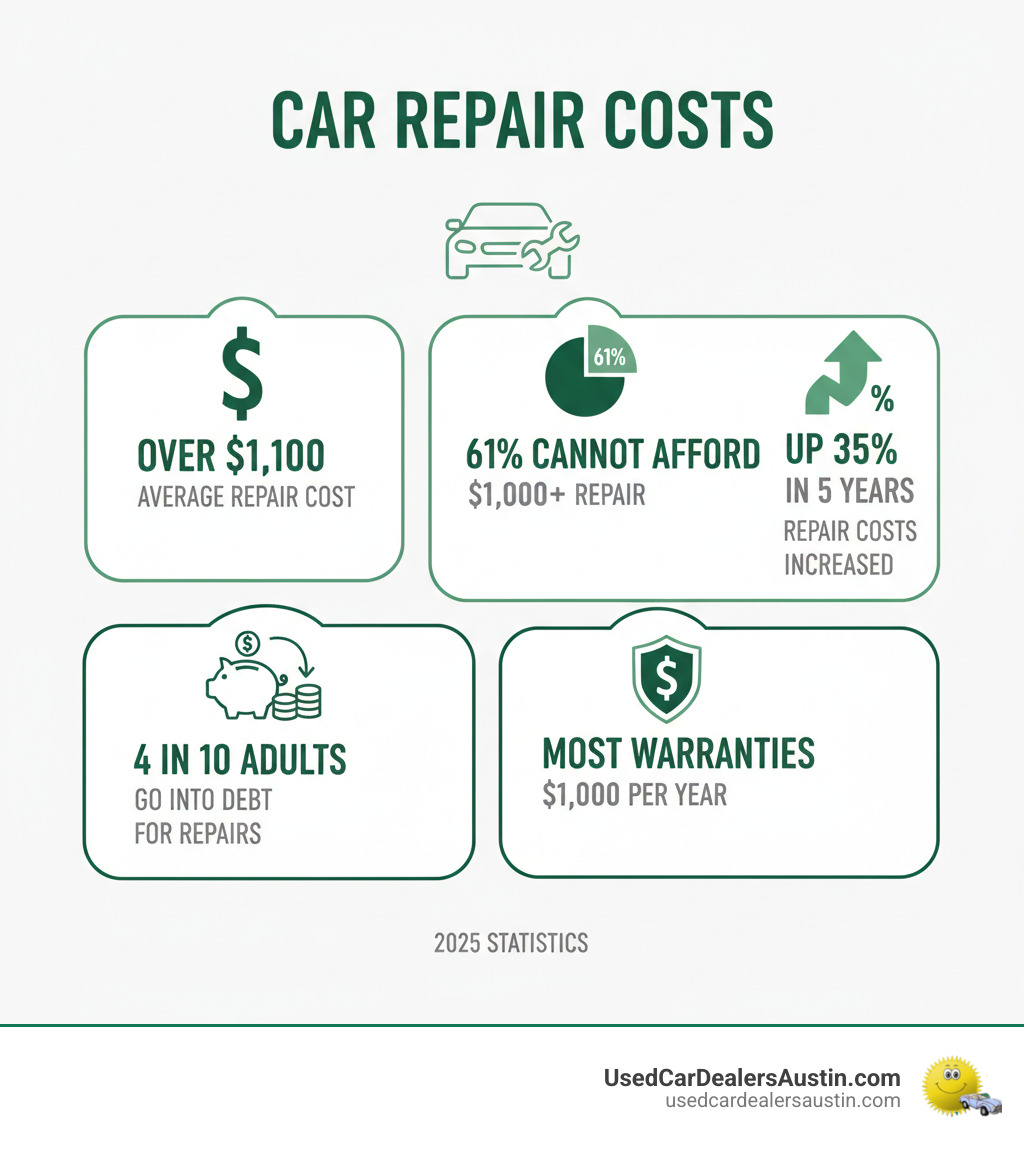
Extended car warranty companies in texas offer vehicle service contracts that protect you from costly repairs after your manufacturer’s warranty expires. With repair costs rising 35% over the past five years and the average repair now exceeding $1,100, having coverage can mean the difference between a manageable expense and going into debt.
The financial reality is stark: 61% of people cannot afford a repair over $1,000. In Texas, with its vast distances and long, isolated roads, a breakdown isn’t just inconvenient—it can leave you stranded. An extended warranty provides peace of mind by covering major mechanical expenses like engine repairs, transmission replacements, and electrical system failures.
It’s key to understand that these plans are vehicle service contracts, not true warranties. They vary widely in coverage, cost, and reliability. Some cover only the powertrain, while others offer near-comprehensive protection. Most plans cost around $1,000 per year, with more extensive coverage ranging from $1,400 to $4,000 annually.
Texas residents have unique considerations. The state’s extreme heat is hard on air conditioning and electrical components, while long highway drives increase wear on powertrains. For anyone, but especially those financing a used car, an unexpected $2,000 repair bill could derail a budget entirely.
Understanding Extended Car Warranties
Many people use the term “extended car warranty,” but what they’re usually buying is a vehicle service contract. A manufacturer’s warranty is included with a new car and covers defects for a set period. A vehicle service contract is a separate plan you purchase to cover repairs after the factory warranty ends.
Think of it as a health insurance policy for your car. It can come from the manufacturer or from third-party extended car warranty companies in texas. The Consumer Financial Protection Bureau explains these distinctions in more detail.
Types of Coverage to Consider
Coverage levels vary significantly, so it’s crucial to know what you’re getting.
Powertrain coverage is the most basic and affordable option. It covers the essential components that make the car move: the engine, transmission, and drive axle. Since these are often the most expensive parts to fix, even basic coverage offers significant protection, making it a good choice for older, high-mileage vehicles.
Stated-component plans cover a specific list of parts beyond the powertrain, such as the air conditioning, steering, and electrical systems. The key is that if a part isn’t explicitly named in the contract, it’s not covered. Always read the list carefully.
Bumper-to-bumper coverage is the most comprehensive option available. Also known as an “exclusionary plan,” it covers nearly every mechanical and electrical part except for a short list of excluded items. Exclusions typically include routine maintenance parts like tires, brake pads, and wiper blades.
Here’s how these coverage types stack up:
| Coverage Type | What It Generally Covers | What It Generally Excludes | Ideal For |
|---|---|---|---|
| Powertrain | Engine, Transmission, Drive Axle | Electrical, AC, Steering, Brakes, Suspension, Technology | Budget-conscious owners, older/high-mileage vehicles, major breakdown protection |
| Stated-Component | Specific list of parts (e.g., Engine, Trans, AC, Steering) | Any part not explicitly listed, wear-and-tear items | Owners wanting more than powertrain, but not full comprehensive coverage |
| Bumper-to-Bumper | Most mechanical/electrical components (with few exclusions) | Wear-and-tear items (tires, wipers, brake pads), routine maintenance, body parts | Owners seeking maximum peace of mind, newer vehicles, comprehensive protection |
Additional Benefits That Add Value
Many plans include valuable perks that are especially useful for Texas drivers.
- Roadside assistance can provide a tow, jump-start, flat tire change, or fuel delivery if you’re stranded.
- Rental car reimbursement helps cover the cost of a rental vehicle while your car is in the shop for a covered repair.
- Trip interruption coverage can reimburse you for lodging and meals if a breakdown occurs far from home.
Understanding what’s covered—and what isn’t—is the key to using your warranty effectively. Learn more in our ultimate guide to used car warranties to make an informed decision.
Are Extended Warranties Worth It? Weighing the Pros and Cons
Deciding on an extended warranty depends entirely on your personal situation and risk tolerance. Let’s break down the arguments for and against getting coverage.
The Pros: Protection and Peace of Mind
The primary reason people choose extended car warranty companies in texas is for financial security against unexpected, costly repairs.
- Budget Protection: Instead of facing a sudden multi-thousand-dollar bill, a warranty smooths out costs into predictable payments (plus a deductible). This is invaluable for anyone on a tight budget, as it prevents a single repair from causing financial chaos.
- Avoiding Debt: With more than half of Americans unable to afford a $1,000 surprise expense, a major repair often leads to high-interest credit card debt. A warranty acts as a financial safety net to prevent this.
- Increased Resale Value: Many warranties are transferable to a new owner. A used car with active coverage is more attractive to buyers and can command a higher price.
- Peace of Mind: Knowing you’re covered for major mechanical failures provides comfort, whether you’re on your daily commute or a long Texas road trip.
The Cons: Costs and Limitations
Extended warranties aren’t without their downsides, and it’s important to consider them.
- Upfront Cost: Plans can be a significant expense, often running from $1,000 to over $4,000 annually. You must weigh whether this money is better spent on a warranty or saved in a personal emergency fund.
- Unused Policies: It’s possible you’ll pay for a warranty and never use it, or that the total cost of your claims will be less than the price of the policy. It’s a gamble on whether you’ll need expensive repairs.
- Deductibles: Most plans require you to pay a deductible (often $100-$200) for each covered repair, so you’ll still have some out-of-pocket costs.
- Coverage Limitations: This is a major pitfall. Warranties don’t cover everything. Wear-and-tear items (brake pads, tires), routine maintenance, and pre-existing conditions are almost always excluded. If a repair isn’t specifically covered by your contract, you’re responsible for the full bill.
The decision comes down to your financial cushion, your vehicle’s reliability, and how much you value peace of mind. Is a warranty right for your used car?
How to Choose the Right Extended Car Warranty Provider in Texas
Choosing a warranty provider can be confusing, but a strategic approach will help you find a reliable plan that protects your investment.

Due Diligence and Comparing Plans
Treat shopping for a warranty like shopping for a car. Don’t settle for the first offer.
- Gather Multiple Quotes: Get at least three to five quotes from different providers to understand the market rate for the coverage you need.
- Compare More Than Price: A cheap plan that doesn’t cover essential components is wasted money. Compare coverage details, deductibles, contract length, and extra benefits like roadside assistance.
- Read the Fine Print: Every contract has exclusions and limitations. You must read it to understand what is and isn’t covered, the claims process, and any waiting periods. A reputable company will happily clarify any confusing terms.
- Understand the Provider Type: Some companies are direct providers that manage their own plans and claims, which can streamline the process. Others are brokers who sell plans administered by a separate insurance company. Both can be reputable, but it’s good to know who you’ll be dealing with when a claim arises.
Claims Process and Repair Shop Choice
A warranty is only as good as its claims process. Ask how claims are filed, the typical approval time, and what documentation is needed. A difficult process can add stress when you’re already dealing with a breakdown.
Equally important is repair facility choice. Look for providers that allow you to take your vehicle to any ASE-certified mechanic or dealership. This flexibility is a huge benefit, especially in a large state like Texas, as it lets you use a trusted local mechanic rather than being restricted to a specific network.
Key Factors for Evaluation
- Reputation: Check customer reviews on independent sites and look up their Better Business Bureau (BBB) rating. A history of positive reviews and a high rating signal a commitment to customer satisfaction.
- Transparency: A trustworthy provider will offer a sample contract upfront. Avoid any company that pressures you to sign before you’ve had time to review everything.
- Common Exclusions: Understand that wear-and-tear items (tires, brakes, wipers), routine maintenance, aftermarket parts, and pre-existing conditions are typically not covered.
- Transferability & Cancellation: A transferable warranty can increase your car’s resale value. Also, check the cancellation policy. Most reputable companies offer a 30-day money-back guarantee and prorated refunds after that.
Understanding Warranty Costs
The price of a warranty depends on several factors:
- Vehicle: Age, mileage, make, and model are the biggest drivers of cost. A newer, low-mileage, reliable car will be cheaper to cover than an older, high-mileage luxury vehicle.
- Coverage: Basic powertrain plans are the most affordable, while comprehensive bumper-to-bumper plans cost the most.
- Deductible: A higher deductible lowers your premium, while a $0 or low-deductible plan will cost more upfront.
On average, expect most plans to cost around $1,000 per year. A comprehensive bumper-to-bumper warranty typically ranges from $1,400 to $4,000 annually. The total cost for a multi-year contract usually falls between $1,500 and $5,000.
For a detailed breakdown, check out our used car warranty cost guide.
Frequently Asked Questions about Texas Car Warranties
You’ve got questions about extended warranties—we’ve got answers. After years of helping Texas drivers find the right coverage for their vehicles, these are the questions we hear most often at UsedCarDealersAustin.com. Let’s clear up the confusion together.
When is the best time to purchase an extended car warranty?
The best time is often before your factory warranty expires. At this point, your vehicle is newer with lower mileage, making you eligible for better rates and more comprehensive plans. You can also purchase a plan during your vehicle purchase, which allows you to conveniently roll the cost into your financing. While you can still buy a warranty after purchase, waiting too long can lead to higher prices, fewer options, or ineligibility due to age or mileage. Any issues that develop before you buy coverage will be considered pre-existing and won’t be covered.
How can I avoid car warranty scams in Texas?
Warranty scams are common, but you can spot them by looking for these red flags:
- Robocalls and High-Pressure Tactics: Legitimate companies do not use robocalls or pressure you to “act now.” If you get an unsolicited call demanding an immediate decision, hang up.
- Deceptive Mail: Be wary of mail designed to look like an official notice from your manufacturer or a government agency. Always verify the sender’s legitimacy.
- Vague Promises: Scammers are often vague about what’s covered and who they are.
Your best defense is to verify the company’s legitimacy. Research them online, check their Better Business Bureau rating, and read independent customer reviews. Never give personal or financial information to an unsolicited caller. If you encounter a scam, you can report it to the FCC to help protect others.
What voids a car warranty?
Even with a great plan, certain actions can void your coverage. To keep your warranty valid, avoid the following:
- Neglect and Improper Maintenance: You must follow the manufacturer’s recommended maintenance schedule (oil changes, fluid flushes, etc.) and keep detailed service records as proof.
- Misuse of the Vehicle: Using your car for racing, off-roading, or other activities outside of normal consumer driving can void the warranty.
- Salvage Title: A vehicle that has been declared a total loss by an insurance company is not eligible for coverage.
- Unauthorized Alterations: Significant modifications to the engine, suspension, or other major systems can void coverage, especially if the aftermarket part causes a failure.
- Odometer Tampering: Altering the odometer is illegal and will immediately invalidate your warranty.
Always read your specific contract to understand the terms and conditions required to keep your coverage in force.
Conclusion: Protecting Your Investment on Texas Roads
You’ve made it this far, which tells us you’re serious about protecting your vehicle and your wallet. That’s exactly the kind of smart thinking that leads to confident car ownership in Texas.
We’ve recapped what we’ve covered. We started by exploring what extended car warranty companies in texas actually offer—vehicle service contracts that kick in after your factory warranty expires. We’ve seen how repair costs have climbed 35% in just five years, with the average repair now topping $1,100. For most Texans, that’s not pocket change.
We walked through the different types of coverage—from basic powertrain plans to comprehensive bumper-to-bumper options—and explained how they differ from manufacturer warranties. We talked about those helpful extras like roadside assistance and rental car reimbursement, benefits that can turn a stressful breakdown into a manageable inconvenience.
The pros and cons discussion was honest and straightforward. Yes, extended warranties provide budget protection and peace of mind, especially when 61% of people can’t afford a repair over $1,000 without financial strain. But they also come with upfront costs, deductibles, and limitations that you need to understand before signing anything.
When it comes to choosing a provider, we emphasized the importance of doing your homework. Compare quotes from multiple companies. Read every word of that fine print. Check customer reviews and BBB ratings. Understand whether you’re dealing with a direct provider or a third-party administrator, and know what that means for your claims process. Make sure you can take your car to ASE-certified mechanics you trust—this is especially important in a state as big as Texas, where you might prefer your local shop over a distant network facility.
We also covered the warning signs of scams—those persistent robocalls, high-pressure sales tactics, and official-looking mail designed to create urgency. If something feels off, trust your instincts and verify everything before handing over any money.
Here’s what matters most: an extended warranty isn’t about whether it’s universally “worth it” or not. It’s about whether it fits your situation. If you’re financing a used car with limited savings, if you drive long distances across Texas highways, or if the thought of a surprise $2,000 repair bill keeps you up at night, then a warranty might be exactly what you need. On the other hand, if you have a solid emergency fund and a reliable vehicle, you might prefer to self-insure.
At UsedCarDealersAustin.com, we’re here to help you make that decision with confidence. We believe in providing reliable vehicles and expert guidance that goes beyond the sale. Whether you’re commuting daily around Austin or planning weekend trips across the Lone Star State, your vehicle is a major investment that deserves protection.
The Texas roads are long, the summers are hot, and breakdowns happen when you least expect them. But with the right preparation and the right coverage, you can drive with confidence knowing you’re protected.
Ready to learn more? Explore our comprehensive used car warranty guide for even more detailed information about protecting your investment.