


Blog
Why the Warranty Question Matters More Than Ever
Are car warranties worth it for used cars? For budget-conscious buyers, this question is crucial, as a major repair bill can be financially devastating.
Quick Answer:
- Yes, if: You’re buying an older car (8+ years), can’t afford a $3,000+ repair bill, or choosing a luxury/unreliable brand
- No, if: The car is highly reliable (Toyota, Honda), still has factory warranty, or you have a solid emergency fund
- Cost: Typically $1,000-$3,000 upfront, with $50-$200 deductibles per repair
- Reality check: Consumer Reports found 55% of warranty buyers never use them
The stakes are higher than ever. According to J.D. Power’s 2024 study, nearly two-thirds of car brands have seen an increase in problems during early ownership. For someone on a tight budget, an unexpected $2,500 transmission repair can be a major setback.
While extended warranties are profitable for sellers, they aren’t automatically a bad deal. The key is understanding when the math works in your favor and when you’re better off self-insuring by saving money for potential repairs.
For buyers with limited credit or tight budgets, this decision is critical. You can’t afford to pay for coverage you’ll never use or get hit with a repair bill that sends you into debt.
Decoding the Fine Print: What is a Used Car Warranty?

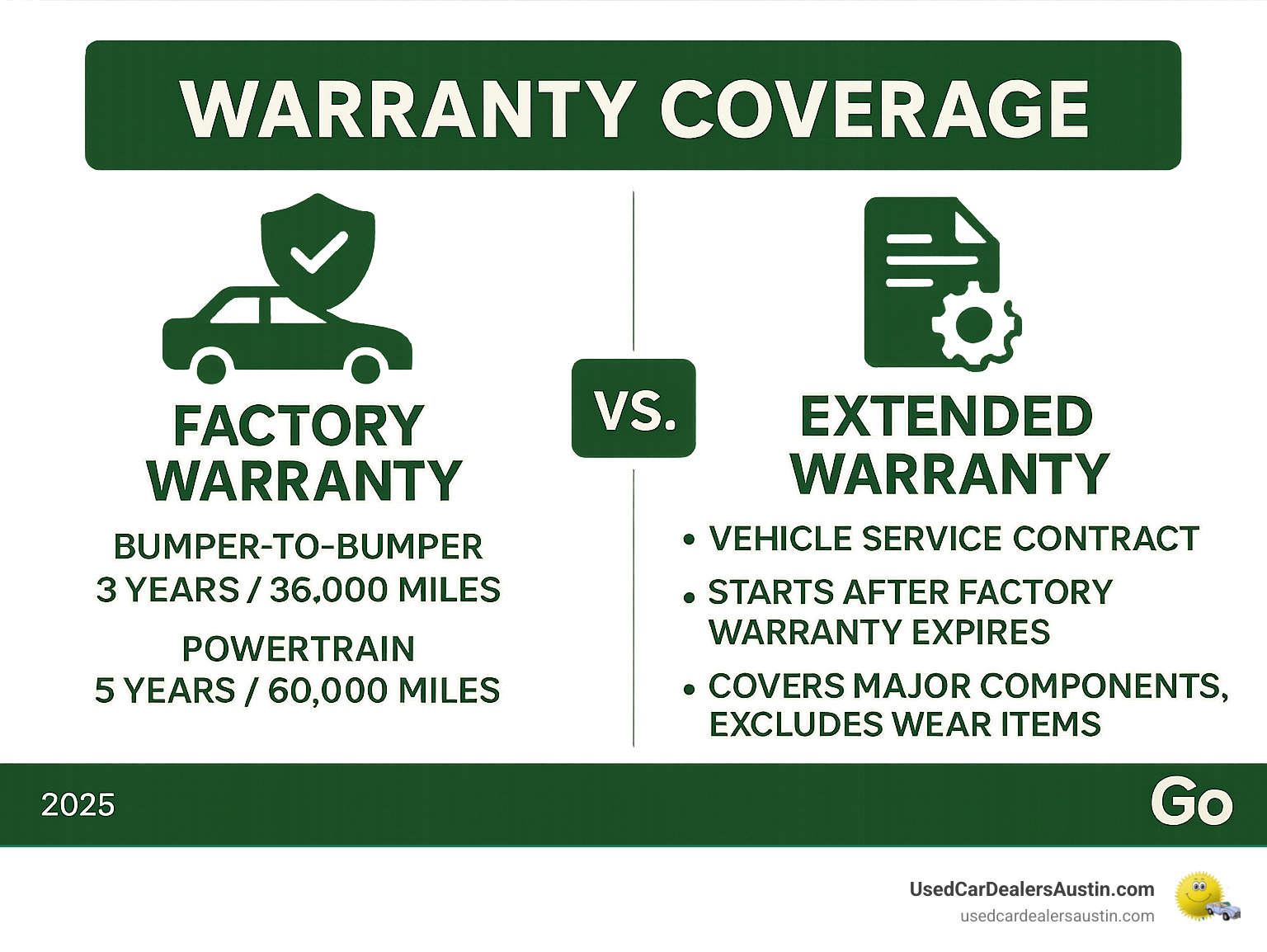
When people ask “are car warranties worth it for used cars,” they’re usually referring to a Vehicle Service Contract. This isn’t a true factory warranty but an insurance-like policy for mechanical parts that you buy separately.
This extended coverage begins after the original factory warranty expires. You pay an upfront cost, and the provider agrees to cover specific repair costs. It acts as a safety net against expensive, unexpected problems, but the contracts can be complex. Understanding the different types of coverage is essential before you buy.
Understanding the Tiers of Coverage
Extended warranties typically come in three tiers, and knowing the difference is key.
Powertrain coverage is the most basic option. It protects the most expensive components: the engine, transmission, and drive axle. A failure in these parts can lead to repairs costing $3,000 to $8,000. However, this coverage won’t help if your air conditioning or electrical system fails.
Named component warranties offer broader protection. These contracts list exactly which parts are covered beyond the powertrain, such as the electrical system, air conditioning, or steering. You must read the contract carefully—if a part isn’t specifically listed, it’s not covered.
Exclusionary coverage is the most comprehensive option, similar to a new car’s factory warranty. Instead of listing what’s covered, it lists what’s not covered. While it costs more, it provides the broadest protection and reduces the chances of a claim being denied for a part you thought was included.
All warranties exclude routine maintenance (oil changes, tires, brake pads). They are designed to protect against unexpected mechanical failures, not the normal costs of ownership. Our guide on What to Consider When Buying a Used Car covers other factors that affect ownership costs.
CPO Warranties: What Sets Them Apart
Certified Pre-Owned (CPO) vehicles are unique because they include manufacturer backing.
CPO is a rigorous certification process, not just a marketing term. Vehicles undergo a multi-point inspection where technicians examine everything from the engine to the electronics. Any part that doesn’t meet manufacturer standards is repaired or replaced with genuine parts.
The warranty included with a CPO vehicle is manufacturer-backed, meaning the company that built the car (like Honda or Ford) stands behind it. This often leads to a smoother claims process through authorized service centers.
CPO benefits often extend beyond repairs, with many programs including roadside assistance, rental car reimbursement, and trip interruption protection. The warranty’s cost is typically built into the vehicle’s price.
A quality CPO vehicle often eliminates the immediate need for an additional extended warranty, as you’re getting factory-level protection. The inspection process also ensures you’re starting with a more reliable car. When evaluating options, our guide on Features to Look For When Buying a Used Car can help you identify quality vehicles that may qualify for CPO programs.
The Financial Breakdown: Are Car Warranties Worth It for Used Cars?

When asking “are car warranties worth it for used cars,” you’re weighing the cost against potential savings. The upfront cost for an extended warranty is typically $1,000 to $3,000, often with a $50 to $200 deductible per repair.
Consider this: AAA estimates yearly car repairs and maintenance cost between $800 and $1,500. If you pay $2,000 for a warranty and only need one $500 repair, you’ve overpaid significantly. A sobering Consumer Reports study found that 55% of people who bought extended warranties never used them, and owners often paid more for coverage than they received in benefits.
However, the decision isn’t just about direct payouts; it’s also about risk management. If a $3,000 engine repair would be a financial crisis, the predictable cost of a warranty might be worthwhile. Rolling a warranty into your loan increases your payments and total interest paid, a key factor when trying to secure the best rates.
The Pros: Why a Warranty Might Be a Smart Move
Despite the costs, warranties can be a wise choice in certain situations.
- Peace of mind: Knowing a major breakdown won’t devastate your finances is valuable, especially if you have limited savings.
- Budgeting predictability: A fixed upfront cost and small deductibles replace the risk of a surprise multi-thousand-dollar repair bill, keeping your budget stable.
- Protection from catastrophic failure: This is where warranties shine. They can cover engine or transmission replacements that cost $3,000 to $8,000+, saving owners from financial disaster.
- Included perks: Many plans bundle valuable extras like roadside assistance, towing, and rental car reimbursement, reducing hassle and out-of-pocket costs during a breakdown.
The Cons: Potential Downsides and Risks
Extended warranties also come with significant drawbacks.
- Cost versus benefit: Many owners pay thousands for coverage they never use, making the warranty an expensive and unnecessary purchase.
- Coverage limitations: Warranties exclude routine maintenance, wear-and-tear items (brakes, tires), and damage from neglect or accidents. Always ask what isn’t covered.
- Wear-and-tear exclusions: The line between “normal wear” and “mechanical breakdown” is a gray area that can lead to denied claims.
- Repair shop restrictions: Some policies require you to use specific approved facilities, which may not be your preferred mechanic.
- Complex terms: Contracts can hide waiting periods, strict maintenance requirements, and claim procedures that can void your coverage if missed.
- Provider reliability: The industry has a mixed reputation. Research any provider thoroughly to avoid companies known for denying claims or using delay tactics.
Your Personal Checklist: Factors to Guide Your Warranty Decision

There is no universal answer to whether car warranties are worth it for used cars. The right choice depends on your specific vehicle, finances, and risk tolerance. Thinking through these factors can save you money and help you avoid a financial disaster.
- Vehicle reliability, age, and mileage: A Toyota with a great track record has a different risk profile than an older European sedan known for expensive repairs. A 3-year-old car with 25,000 miles is far less risky than an 8-year-old car with 100,000 miles.
- Driving habits: Heavy daily commuting accelerates wear and tear, making a warranty more valuable than for someone who only drives on weekends. Our guide on How Mileage Factors Important When Buying a Used Car explains this in more detail.
- Financial safety net: If you can comfortably cover a surprise $3,000 repair bill, you might be better off self-insuring. If not, a warranty provides crucial protection.
- Risk tolerance: Some people are comfortable with the risk of a large repair bill, while others prefer the certainty of a predictable warranty cost. Neither approach is wrong; it’s about what lets you sleep at night.
How to Gauge a Used Car’s Reliability
Before deciding on a warranty, investigate the car’s expected reliability.
- J.D. Power dependability scores: Based on real owner experiences, these scores are a great indicator of long-term quality. The fact that vehicle dependability has declined according to a 2024 study makes this research vital.
- RepairPal data: This resource provides average annual repair costs for specific models, giving you a clear financial picture.
- Pre-purchase inspection (PPI): A professional mechanic can identify potential issues before you buy, potentially saving you thousands. A PPI is a small investment for significant peace of mind.
- Vehicle history report: Check for red flags like multiple accidents, salvage titles, or inconsistent maintenance records.
What are the alternatives if you decide a car warranty isn’t worth it for your used car?
If a warranty isn’t for you, there are several solid alternatives.
- The emergency fund: Instead of paying a warranty company, save the same amount in a dedicated high-yield savings account. You control the money, earn interest, and keep it if no major repairs are needed.
- Proactive maintenance: Following the manufacturer’s service schedule can prevent many of the major issues that warranties cover. It’s cheaper to prevent a problem than to fix it.
- Regular inspections: An annual check-up with a trusted mechanic can catch problems early while they are still small and manageable.
- Mechanical breakdown insurance (MBI): Offered by some auto insurers, MBI can sometimes be a better value than a third-party service contract. It’s worth exploring when looking into How to Find the Right Insurance Coverage for Your Used Car.
The Verdict: When to Say ‘Yes’ and When to Skip It
So, are car warranties worth it for used cars? The answer depends entirely on your specific situation. The decision is a calculated risk, balancing the cost of coverage against the potential for expensive repairs.
Before buying any warranty, ensure you’re starting with a quality vehicle. Our guide on how to Spot Red Flags When Shopping at a Used Car Dealership can help you avoid buying a lemon.
Scenarios Where a Warranty Makes Sense
A warranty is often a smart investment in these situations:
- Older, high-mileage cars: For vehicles with over 70,000 miles, the likelihood of a major component failure increases, making a warranty’s cost easier to justify.
- Complex electronics and features: Modern cars are filled with expensive tech. A warranty can protect you from a $2,000 bill to fix a malfunctioning infotainment screen or sensor system.
- Luxury or European vehicles: Brands like BMW, Mercedes-Benz, and Audi are known for high repair costs due to specialized parts and labor. A simple repair on a luxury car can cost three times as much as on a standard model.
- Limited personal savings: If a $3,000 repair bill would be a financial crisis, a warranty is essential protection. It turns an unknown risk into a manageable, fixed cost.
- You prefer predictable costs: Some people value the peace of mind that comes from knowing their maximum out-of-pocket expense is a small deductible.
- Known reliability issues: If your research shows the specific model you’re buying has a common, expensive problem (like transmission failure), getting a warranty is a strategic move.
When It’s Best to Skip: Reconsidering if car warranties are worth it for used cars
You’re likely better off keeping the money in these cases:
- Highly reliable models: If you’re buying a car with a stellar reputation for reliability, like a Toyota Camry or Honda Accord, the odds are you’ll pay more for the warranty than you’ll get back in repairs.
- Remaining factory warranty: If the car is only a few years old, it may still have manufacturer coverage. There’s no need to pay for overlapping protection.
- A robust emergency fund: If you have savings set aside specifically for car repairs, you have effectively created your own self-funded warranty.
- You are a skilled DIY mechanic: If you can perform most repairs yourself, your costs are limited to parts, making a warranty less valuable.
- Short-term ownership: If you plan to sell the car within a year or two, you’re less likely to encounter a major failure, and most warranties are not transferable.
The bottom line is that a warranty can be worth it, but only if your car, finances, and risk tolerance align with the scenarios where they provide real value. Don’t be pressured into a quick decision.
Frequently Asked Questions about Used Car Warranties
Here are straight answers to the most common questions about whether car warranties are worth it for used cars.
How is an extended warranty different from my car insurance?
Car insurance and extended warranties cover completely different events.
- Car insurance covers damage to your car from external events like accidents, theft, hail, or falling objects. It also includes liability coverage for damages you may cause to others.
- An extended warranty (or Vehicle Service Contract) covers the cost of repairing mechanical breakdowns inside your car, such as a failed engine, transmission, or air conditioning compressor.
Think of it this way: insurance protects you from the outside world, while a warranty protects you from your car’s own mechanical failures. You need both for complete protection. For more details, see our guide on How to Find the Right Insurance Coverage for Your Used Car.
What common repairs are NOT covered by a used car warranty?
Understanding exclusions is key to avoiding frustration. Warranties do not cover:
- Routine maintenance: Oil changes, tire rotations, air filters, and spark plugs are your responsibility.
- Wear-and-tear items: Parts designed to wear out and be replaced, such as brake pads, tires, wiper blades, and batteries, are not covered.
- Pre-existing conditions: Any problem that existed before you purchased the warranty will not be covered. This is why a pre-purchase inspection is so important.
- Damage from neglect or abuse: If you skip oil changes and your engine fails, or use the wrong fuel, the claim will be denied.
- Accidental damage: Damage from hitting a pothole or road debris is an insurance matter, not a warranty issue.
Always read the contract to understand the specific exclusions of your policy.
Can I negotiate the price of an extended warranty?
Yes, and you absolutely should. Dealers often have significant markups on warranties, creating room for negotiation.
- Shop around first: Get quotes from third-party providers to establish a baseline for a reasonable price.
- Negotiate separately: Finalize the car’s price before discussing add-ons like a warranty. This prevents the costs from being bundled and obscured.
- You don’t have to buy immediately: You can often purchase a warranty later, giving you time to research without pressure. However, options may become more limited as the car ages.
- Avoid rolling it into your loan: Paying for the warranty upfront saves you from paying interest on it for years, which can add hundreds to the total cost. This is crucial when trying to find out How to Secure the Best Used Car Loan Rates in 2024.
Don’t hesitate to ask for a better price. The worst they can say is no, but you can often secure a discount.
Conclusion: Making the Right Choice for Your Peace of Mind and Wallet
The answer to “are car warranties worth it for used cars?” is a personal one. It’s not always a clear-cut financial win, as warranty companies are profitable for a reason. However, for the right person and the right car, the value of peace of mind can be immense.
Your decision should come down to an honest assessment of three things: the car’s reliability, your financial situation, and your personal tolerance for risk. If you’re buying a high-mileage luxury car and have limited savings, a warranty can be a financial lifesaver. If you’re buying a reliable model and have a healthy emergency fund, you’re likely better off self-insuring.
Don’t let a salesperson pressure you. Do your research, understand what a policy covers (and excludes), and be honest about your financial safety net. The goal is to choose the path that lets you enjoy your new-to-you car without constant worry.
At UsedCarDealersAustin.com, we prioritize your peace of mind from the start. Our certified vehicles undergo thorough inspections to ensure reliability, which can reduce the need for an extended warranty. Our in-house financing experts can also help you structure a budget that works for you, whether you add a warranty or build your own repair fund.
Ready to find a dependable used car? Explore our inventory of certified used cars in Austin and let our team help you find the perfect balance of reliability and affordability.