


Blog
Why Transferring Car Ownership Correctly Matters in Texas

How to transfer used car ownership texas involves specific steps that protect both buyers and sellers from serious legal and financial consequences. In Texas, failing to properly transfer a vehicle into the buyer’s name could result in the seller being held responsible for tickets, toll violations or even crimes committed with the vehicle.
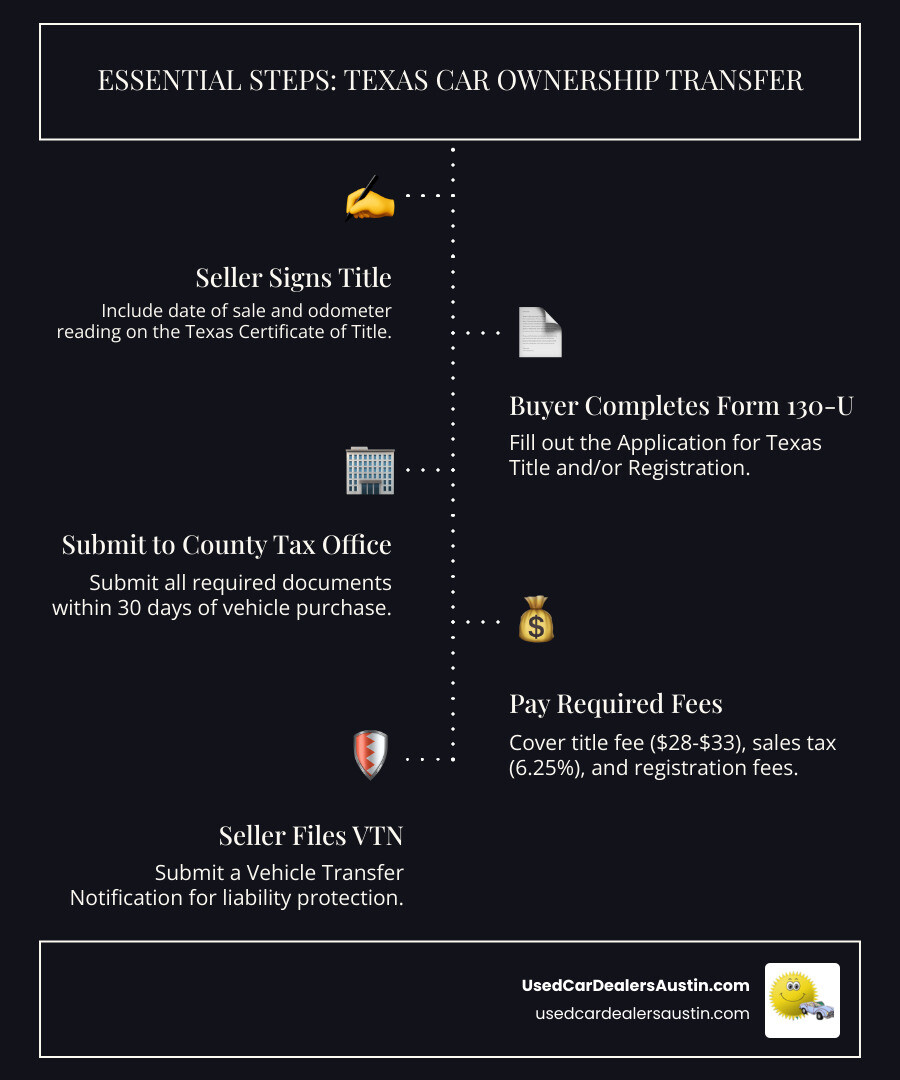
Quick Answer: Essential Steps to Transfer Used Car Ownership in Texas
- Seller signs the title – Include date of sale and odometer reading
- Buyer completes Form 130-U – Application for Texas Title and/or Registration
- Submit to county tax office – Within 30 days of purchase
- Pay required fees – Title fee ($28-$33), sales tax (6.25%), registration fees
- Seller files Vehicle Transfer Notification – Protects from future liability
The process becomes more complex when you consider that vehicles are required to be titled in the buyer’s name within 30 days from the date of sale. Miss this deadline, and you’ll face penalty fees that can quickly add up.
Whether you’re buying from a private seller or trading in at a dealership, understanding the correct procedures can save you hundreds of dollars in penalties and protect you from legal headaches down the road.
For buyers with credit challenges, working with a reputable dealer who handles the paperwork correctly is especially important – it ensures you get proper documentation and avoid costly mistakes that could complicate future financing opportunities.
Essential Documents and Pre-Transfer Checks
Before we dive into the step-by-step process, let’s gather our arsenal of essential documents. Think of this as your pre-flight checklist for a smooth title transfer. Without these, your journey through the Texas Department of Motor Vehicles (TxDMV) will hit some turbulence.

Here’s what you’ll absolutely need:
- Texas Certificate of Title (Signed by Seller): This is the holy grail of vehicle ownership. The seller must sign the back of the title, ensuring their signature is original and legible. If there’s more than one seller listed and they are separated by “and” or “and/or,” all listed sellers must sign. If separated by “or,” only one needs to sign. It’s also where the odometer reading and sale price should be recorded. If the seller has lost the title, they will need to apply for a Certified Copy of Title (Form VTR-34) from their local DMV office.
- Form 130-U (Application for Texas Title and/or Registration): This crucial form serves as the application for the new title. Both the seller and buyer will need to sign this form. It also requires the sales price and odometer reading. We’ll dive deeper into this form later! You can download it directly from the Texas Department of Motor Vehicles website.
- Government-issued Photo ID: Both the buyer and seller will need valid identification. This typically includes a driver’s license or state-issued ID.
- Proof of Insurance: Buyers must provide proof of current Texas liability insurance. The minimum coverage required in Texas is 30/60/25 ($30,000 for each injured person, up to $60,000 per accident, and $25,000 for property damage). The insurance must be in the buyer’s name. Good news: if you already have insurance on another vehicle, it can often be used for the first 30 days from the date of sale for the title transfer.
- Lien Release (if applicable): If there was a lien (a loan) on the vehicle, the seller must provide a signed release from the lienholder stating the loan has been paid in full. Without this, you cannot transfer the title free and clear.
- Odometer Disclosure: For vehicles of model year 2011 or newer (until December 31, 2030), or any vehicle less than 20 model years old (starting January 1, 2031), an odometer disclosure is required. This is typically completed on the title itself or on Form 130-U. It ensures the mileage stated is accurate.
Protecting Yourself as a Buyer
When you’re looking to buy a used car, especially from a private seller, you become your own best detective. It’s crucial to perform some due diligence to protect your investment and avoid any nasty surprises.
- VIN Check: The Vehicle Identification Number (VIN) is your car’s unique fingerprint. Always verify that the VIN on the vehicle matches the VIN on the title. Check the VIN on the dash and the VIN plate for any signs of tampering.
- Title Check Tool: This is your secret weapon! The TxDMV offers a Title Check tool that allows you to look up pertinent title information. This is invaluable for checking for existing liens, salvage titles, or other issues that could complicate the transfer. We highly recommend using this before you hand over any cash.
- Liens: Always confirm there are no outstanding liens on the vehicle. If the seller states they’ve paid off a loan, ask for the lien release document. Without it, the vehicle still legally belongs to the lender until the lien is formally removed.
- Salvage Title: A salvage title indicates the vehicle was declared a total loss by an insurance company, usually due to significant damage. While you can transfer a salvage title, be aware that it affects the car’s value and future insurability. The Title Check tool can help identify this.
- Stolen Vehicle Check: This is where your detective skills really come in handy. Using the VIN, you can often check national databases to ensure the vehicle hasn’t been reported stolen. If a deal seems “too good to be true,” it probably is. Be wary of sellers who have no fixed address, place of employment, or phone number.
- Vehicle History Report: Consider purchasing a vehicle history report from a reputable service. These reports can reveal past accidents, flood damage, recall information, and service history, giving you a comprehensive picture of the vehicle’s past.
The Seller’s Step-by-Step Guide to Transferring Ownership
As a seller, your primary goal is to legally transfer ownership and protect yourself from any future liability associated with the vehicle. It’s relatively straightforward, but missing a step can lead to big headaches down the road.
Here’s our guide for sellers:
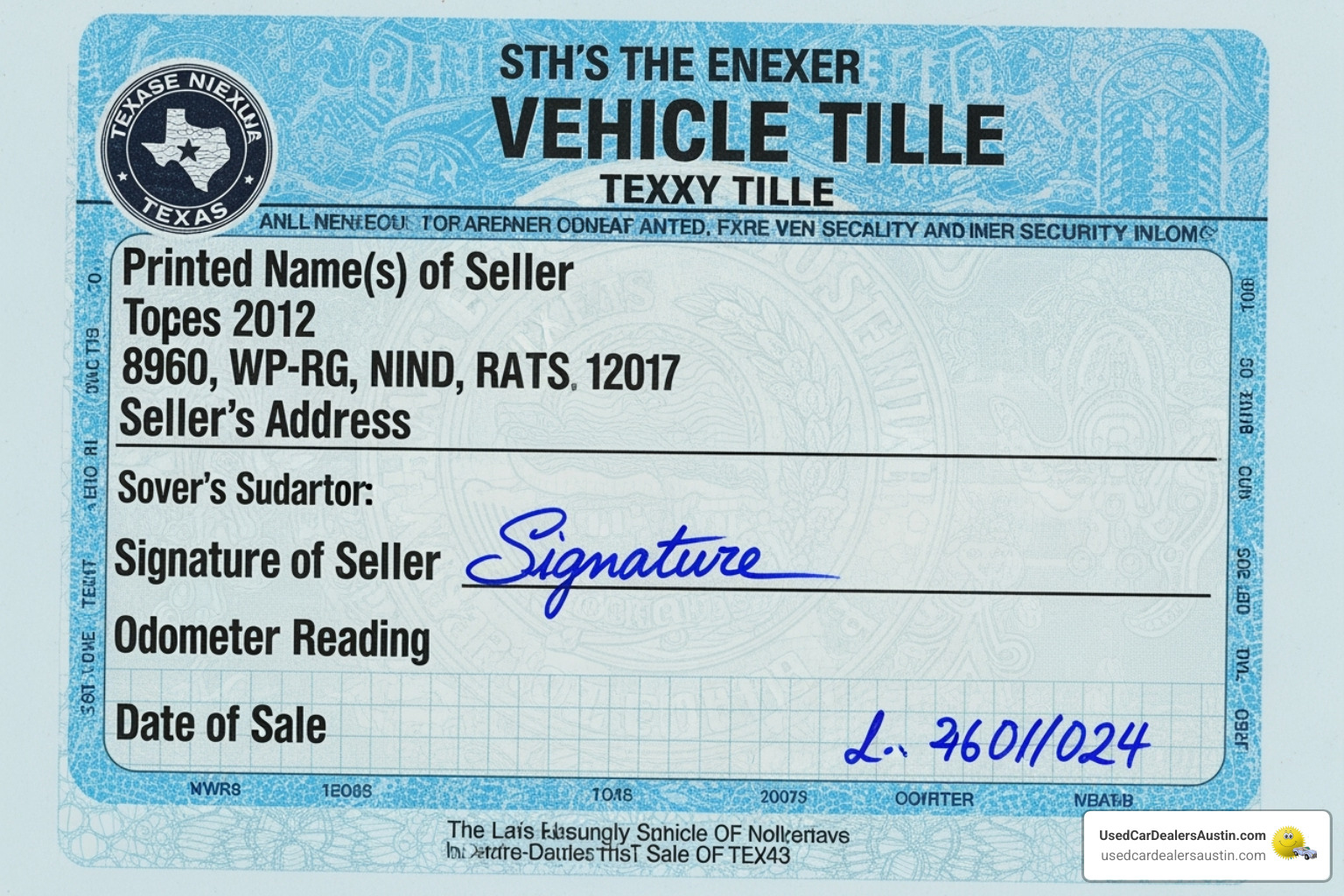
- Sign the Title: This is the most critical step. On the back of the Texas Certificate of Title, you’ll find designated spaces for the seller’s signature, the date of sale, and the odometer reading. Use blue or black ink and make sure your handwriting is legible. Avoid any white-out or erasures, as this can void the document.
- Record the Odometer Reading and Sales Price: Be accurate with the odometer reading. For vehicles that require it (model year 2011+ or less than 20 years old), this is a legal requirement. Also, ensure the sales price is clearly written on the title or on Form 130-U. This will be used to calculate the sales tax the buyer owes.
- Consider a Bill of Sale: While not legally required for title transfer in Texas since April 1, 1990, a bill of sale is a smart move. It provides a written record of the transaction, including the date, sale price, vehicle information (VIN, make, model), and buyer/seller details. It’s extra proof for your records and can prevent misunderstandings.
- Remove Your License Plates: In Texas, license plates belong to the seller, not the vehicle. You have a few options:
- Transfer them: You can transfer your plates to another vehicle you own, provided it’s the same classification.
- Keep them: You can hold onto your plates for future use on another vehicle (just be sure to remove the registration sticker).
- Dispose of them: If you don’t plan to use them again, you should deface the plates to prevent misuse and dispose of them properly.
- Remove Your Registration Sticker: Your registration sticker is tied to your plates. Once you remove your plates, peel off the registration sticker from the windshield. The new owner will receive a new one.
The Most Important Step: Vehicle Transfer Notification (VTN)
This is hands down the single most important step for sellers to protect themselves. We can’t stress this enough!
- What is it? The Vehicle Transfer Notification (Form VTR-346) is a form you submit to the TxDMV that officially notifies them you’ve sold, traded, or donated your vehicle.
- Why is it important? This notification helps protect you from liability for any criminal or civil acts (like parking tickets, toll violations, or even accidents) committed with the vehicle after you’ve sold it. Think of it as your official “I’m not responsible anymore!” declaration. Failing to properly notify the state could leave you on the hook for someone else’s mistakes.
- The 30-Day Deadline: You should submit this form within 30 days from the date of sale. While the TxDMV will still note the transfer if submitted later, doing it within 30 days offers the best liability protection.
- It’s NOT a Title Transfer: Filing a VTN does not transfer ownership. That’s the buyer’s responsibility. The VTN simply notes on the vehicle’s record that you are no longer the owner. The Texas title record will reflect your name until the new owner successfully transfers the title.
You can easily Submit a Vehicle Transfer Notification online for expedited processing, or you can mail in the completed Form VTR-346. Don’t submit it both ways!
The Buyer’s Step-by-Step Guide to Claiming Ownership
Alright, buyers, you’ve found your dream car, shaken hands on the deal, and now it’s time to make it officially yours. This is where you finalize the how to transfer used car ownership texas process.

Here’s what you need to do:
- Receive the Signed Title and Form 130-U: Ensure the seller has properly signed the back of the title, recorded the date of sale, and noted the odometer reading. Also, make sure they’ve signed their part of the Form 130-U.
- Obtain Proof of Insurance: As discussed, you’ll need current Texas liability insurance that meets the state’s minimum requirements (30/60/25) and is in your name.
- Get a Vehicle Inspection: Before you can title and register your vehicle, it will need a passing Texas vehicle inspection. This includes a safety inspection and, for vehicles registered in certain counties, an emissions inspection. You’ll receive a Vehicle Inspection Report (VIR).
- Head to the County Tax Assessor-Collector’s Office: This is where all the magic happens! You’ll submit all your documents and pay the necessary fees. We highly recommend that the seller accompany you to the county tax office if you’re buying from a private individual. This ensures everything is correct and helps avoid any issues with the transfer. If you can’t go together, make sure you have all the necessary signed documents from the seller.
How to transfer used car ownership texas: Private Seller vs. Dealership
The process for how to transfer used car ownership texas varies slightly depending on where you buy your car.
- Private Party Sale: When you buy from an individual, you are responsible for completing the title transfer. You’ll gather all the documents mentioned above (signed title, Form 130-U, proof of insurance, VIR, ID) and submit them to your local county tax assessor-collector’s office within 30 days of the purchase. This is why having the seller accompany you is a best practice.
- Dealership Purchase: If you purchase a vehicle from a licensed dealer in Texas, they are required to handle the title and registration paperwork on your behalf. This is a huge convenience! They typically process the title and registration within 30 days of purchase (or 45 days if seller-financed). They will also provide you with temporary tags to legally drive the vehicle while the permanent plates and title are being processed. Make sure the dealer provides you with a receipt showing the vehicle has been titled in your name.
You can always refer back to and Download the Application for Texas Title and/or Registration (Form 130-U) if you need a fresh copy.
Vehicle Inspection Requirements
Before you can complete your title transfer and registration, your vehicle needs to pass a Texas inspection. This is part of the “Two Steps, One Sticker” program, where your inspection and registration are linked.
- Safety Inspection: All vehicles in Texas are subject to an annual safety inspection. This checks components like brakes, lights, tires, steering, and more to ensure your vehicle is safe for the road.
- Emissions Inspection: In certain Texas counties, an emissions inspection is also required. These are typically the larger, more urban counties. Currently, emissions inspections are required for vehicles registered in Brazoria, Collin, Dallas, Denton, El Paso, Ellis, Fort Bend, Galveston, Harris, Johnson, Kaufman, Montgomery, Parker, Rockwall, Tarrant, Travis, and Williamson counties. If you’re in one of these areas, your vehicle must pass both safety and emissions inspections. Vehicles like motorcycles, diesel-powered vehicles, and antique vehicles are often exempt from emissions testing.
- Vehicle Inspection Report (VIR): Once your vehicle passes inspection, the inspection facility will provide you with a Vehicle Inspection Report (VIR). You’ll need to provide this to the county tax office when you submit your title application.
You can find a state-approved Safety Inspection Station near you.
How to Transfer Used Car Ownership Texas: Fees, Deadlines, and Penalties
Ah, the moment we’ve all been waiting for: the cost and the clock! Understanding the fees and, more importantly, the deadlines is crucial to avoiding unnecessary expenses when learning how to transfer used car ownership texas.
Understanding the Costs
The buyer is responsible for the following fees:
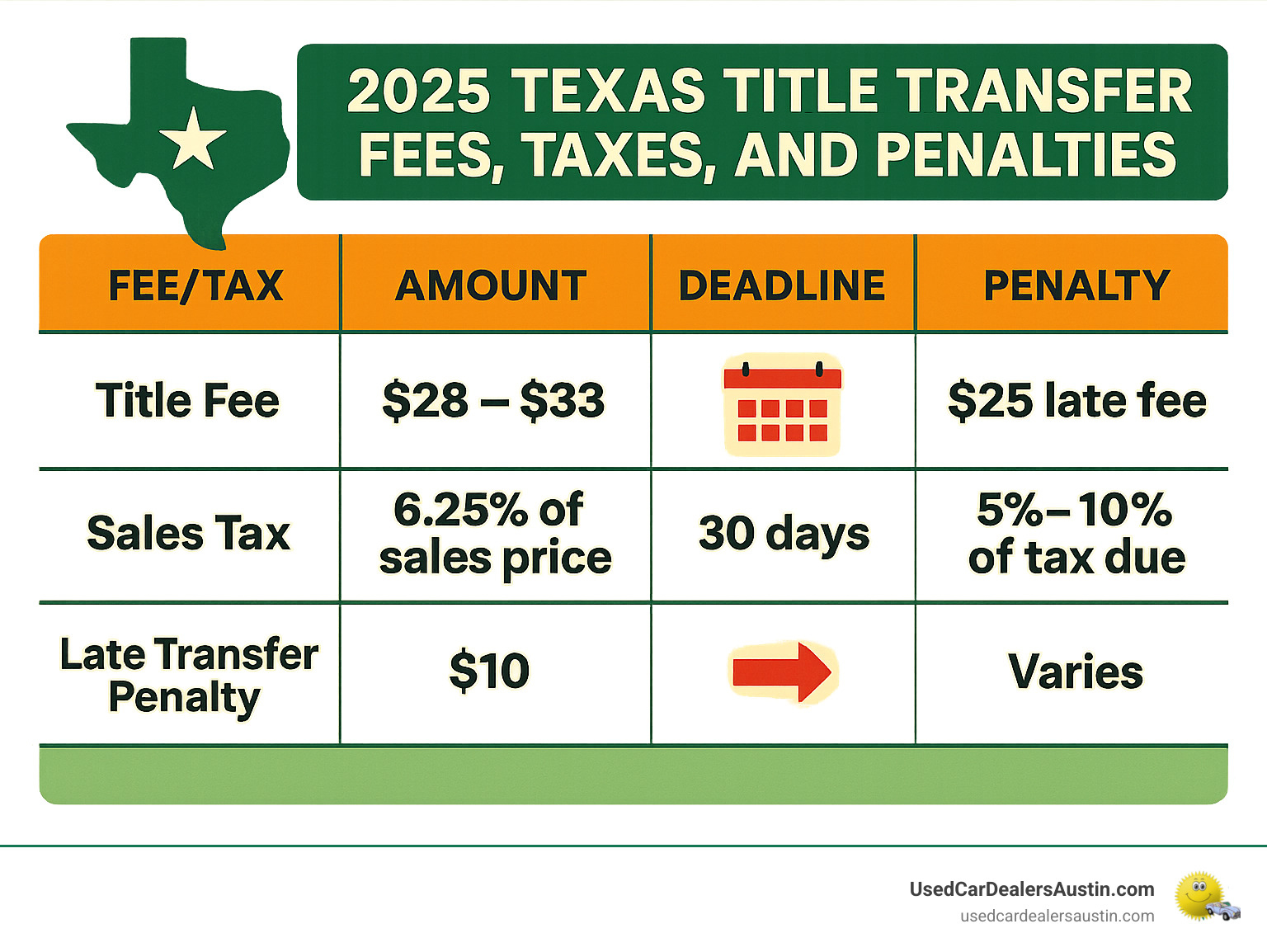
- Title Fee: This is a relatively small fee, typically ranging from $28 to $33, depending on your county.
- Sales Tax: This is usually the largest chunk of change. Texas sales tax on vehicles is 6.25%. It’s calculated based on either the purchase price or the Standard Presumptive Value (SPV) of the vehicle, whichever is higher. The SPV is a value determined by the state for tax purposes, based on factors like make, model, and year. This prevents people from reporting a ridiculously low sale price to avoid taxes.
- Registration Fee: This annual fee is also paid at the time of title transfer. It usually starts around $51.75 but can vary slightly by county. This covers your license plates and registration sticker.
- Credit Card Convenience Fees: If you pay with a credit card, be aware there might be a convenience fee. For transactions $100 or less, it’s typically $3. For transactions over $100, it’s usually 3% of the total. Cash, check, or money order are often accepted without these fees.
How to transfer used car ownership texas: The 30-Day Deadline
We’ve mentioned it a few times, but it bears repeating:
- The Golden Rule: Vehicles are required to be titled in the buyer’s name within 30 days from the date of sale. This 30-day window is critical.
- Avoiding Penalties: If you miss this deadline, you’ll face penalties that can add up quickly:
- $25 Penalty: A $25 penalty is assessed for every additional 30 days the title transfer is late.
- Sales Tax Penalty: You’ll face a 5% sales tax penalty if the transfer is more than 30 days late, and a 10% sales tax penalty if it’s more than 60 days late.
So, if you’re buying, don’t procrastinate! Gather your documents, get your inspection, and head to the county tax office promptly.
Handling Special Title Transfer Scenarios
Life throws curveballs, and sometimes vehicle ownership transfers aren’t as simple as a straightforward sale. Fear not! Texas has provisions for various special situations, making how to transfer used car ownership texas possible even in unique circumstances.

Gifting a Vehicle
Yes, you can give a car as a gift in Texas! But there are specific rules to avoid paying full sales tax.
- $10 Gift Tax: Instead of the 6.25% sales tax, a special $10 gift tax applies when a vehicle is gifted between specific eligible parties.
- Eligible Parties: This special tax applies only when the vehicle is gifted from a spouse (as separate property), parent/stepparent, child/stepchild, sibling, grandparent, grandchild, or guardian (with proof). It also applies to vehicles donated to or by a qualifying 501(c)(3) non-profit service organization.
- Affidavit of Motor Vehicle Gift Transfer: To qualify for the $10 gift tax, you’ll need to submit a completed Affidavit of Motor Vehicle Gift Transfer (Comptroller Form 14-317). Both the donor and recipient must sign this affidavit, and their signatures usually need to be notarized unless signed in front of a county tax office employee. This form confirms it’s a true gift, not a hidden sale.
Inherited or Divorce-Related Transfers
These situations involve legal complexities, but the TxDMV has processes in place to facilitate the transfer.
- Inherited Vehicles:
- With a Will (Probated): If the deceased owner had a will that went through probate court, you’ll typically need certified copies of the Letters of Testamentary (or Administration) and a Bill of Sale from the executor/administrator.
- Without a Will (No Probate): If there’s no will or it won’t be probated, you might use an Affidavit of Heirship for a Motor Vehicle (Form VTR-262). This form is used to establish heirship for a motor vehicle when there is no will or probate.
- Deceased Spouse: For a deceased spouse, if the car is part of the will, it goes through probate. If there’s no will, the surviving spouse might fill out an Affidavit of Heirship for a Motor Vehicle.
-
Divorce Decrees: If a vehicle is awarded to you in a certified divorce decree, you can use that decree in lieu of a signed title from your ex-spouse, especially if there was no lien on the vehicle. For community property transfers in a divorce, motor vehicle sales tax may not be due. If the decree doesn’t specifically award the vehicle, you’ll need a properly assigned title to transfer it.
-
Out-of-State Transfers: If you’re bringing a vehicle from another state into Texas, you’ll generally need:
- Your out-of-state title.
- A completed Form 130-U.
- Proof of Texas insurance.
- A Texas vehicle safety inspection (and emissions, if applicable).
- Your acceptable form of ID.
- Payment for fees.
Conclusion
Navigating how to transfer used car ownership texas might seem like a maze, but by following these steps, you can ensure a smooth, legal, and penalty-free process. For sellers, your ultimate protection lies in properly signing the title, documenting the sale, and, most importantly, filing that Vehicle Transfer Notification. For buyers, diligence in checking the vehicle’s history, securing all necessary documents, and submitting them promptly to the county tax office is key.
Here at UsedCarDealersAustin.com, we understand that paperwork can be a hassle. That’s why, when you purchase a certified used car, truck, or SUV from us, we handle all the title and registration paperwork for you, ensuring a smooth and hassle-free purchase. Our comprehensive in-house financing options, including solutions for bad or no credit, low down payments, and competitive rates, mean you can focus on finding the perfect vehicle, while we take care of the rest.
Ready to find your next ride without the title transfer worries? Learn more about transferring your used car title or browse our extensive inventory today!